Let’s start with the wrong question.
“Is Northern Cyprus cheap?”
It can be.
But that’s not particularly interesting.
You can live cheaply almost anywhere if you’re willing to design your entire life around spending as little as possible.
The better question is:
What does it actually cost to live well here?
Not like you’re permanently on holiday.
Not like you’re surviving on a backpacker’s budget.
But living properly.
A good home.
A car.
Groceries you actually want to eat.
Dinner out.
Coffee without checking your bank account first.
A gym membership.
The occasional beach club.
A spontaneous weekend.
A life you enjoy — not simply one you can afford.
That’s the version of the cost of living in Northern Cyprus I think is actually worth discussing.
01 — First, Define What “Living Well” Means
“Comfortable” is personal.
For one person, it’s a small apartment, morning swims and dinner at home.
For someone else, it’s a sea-view home, a good SUV, restaurants several times a week, golf on Friday and absolutely no interest in calculating whether dessert fits the monthly budget.
Neither is wrong.
They’re simply different lives with different price tags.
That’s why averages can be misleading.
If somebody tells you that you can live in Northern Cyprus for £800 a month, the statement is almost meaningless without knowing how they live.
Where?
Alone or as a couple?
Renting or owning?
Driving what?
Eating where?
Air conditioning all summer?
Going out twice a month or four times a week?
The island can accommodate very different budgets.
So instead of pretending there is one magical number, I’m going to look at the expenses that actually shape your life here — and then build a few realistic lifestyles around them.
Because the question isn’t “How little can I spend?”
It’s “What kind of life does my budget buy me?”
02 — Housing: Rent or Own Changes the Equation
Renting
Housing is probably the single biggest variable in your Northern Cyprus budget.
And location changes the equation quickly.
A simple apartment in an established building is one thing.
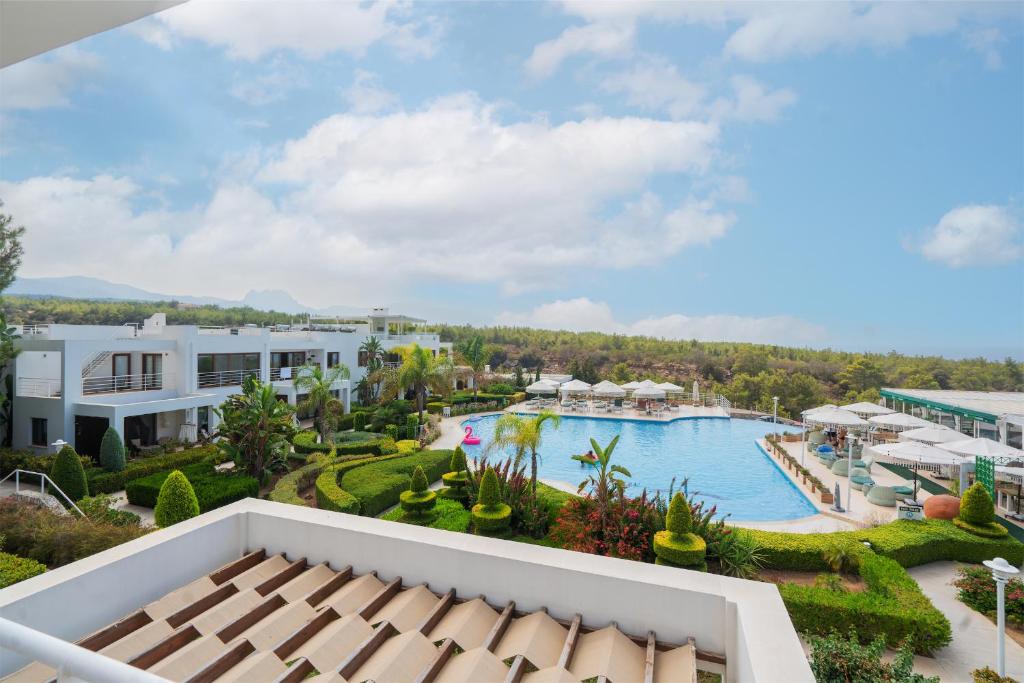
A new sea-view residence with pools, gym, spa and landscaped facilities is another.
As a rough 2026 guide, I would think about long-term rents like this:
1-bedroom apartment: roughly £450–£700 per month
2-bedroom apartment: roughly £600–£1,000 per month
Premium sea-view / resort-style homes: £1,000+ per month can become very easy to reach.
Kyrenia’s most convenient areas generally command a premium, while moving east towards Esentepe can give you more space, views and facilities for the same budget.
But don’t choose purely by rent.
Saving £150 a month on your home makes very little sense if you then spend your life driving somewhere else because you don’t actually enjoy where you live.
Housing isn’t only your biggest expense.
It’s also the expense that influences almost every day of your life.
Buying
Buying changes the calculation completely.
Property prices in Northern Cyprus vary enormously depending on location, age, view, facilities and whether you’re buying a completed home or something still under construction.
You can still find older or simpler apartments at surprisingly accessible prices.
Move into newer coastal developments, sea views, resort facilities or premium locations and the numbers climb quickly.
As a broad 2026 reference:
Studios / smaller apartments: approximately £70,000–£120,000+
1-bedroom apartments: approximately £90,000–£180,000+
2-bedroom apartments: approximately £130,000–£300,000+
Villas and premium homes: from roughly £350,000 to well beyond £1 million.
Those ranges are intentionally wide.
Because asking “How much does an apartment cost in Northern Cyprus?” is a little like asking “How much does a car cost?”
Which one?
But here’s the important cost-of-living distinction.
If you already own your home outright, Northern Cyprus can suddenly feel considerably cheaper to live in.
Your £700 or £1,000 monthly rent disappears from the equation.
On the other hand, buying a £200,000 apartment does not mean your annual cost of living is suddenly £200,000 higher.
That’s an asset purchase.
What matters for this article is what that home costs you after you own it — maintenance, utilities, insurance, taxes and any communal or resort fees.
Rent determines your monthly budget. Ownership changes the structure of it.
The Costs People Forget After Buying
Owning the home doesn’t make housing free.
It simply changes the bills.
In an independent home, ongoing costs may be relatively straightforward.
In a managed development or resort, you may also have a communal or maintenance fee covering things such as pools, landscaping, common areas, security, lifts, gyms or other shared facilities.
And this is one number I would always ask about before buying, not afterwards.
A beautiful development with several pools, a gym and landscaped gardens doesn’t maintain itself.
Then come the normal household costs:
Electricity.
Water.
Internet.
Home insurance.
Air-conditioning in summer.
Heating in winter, depending on your home.
And the smaller annual property-related charges that are easy to forget when you’re focused on the purchase price.
One important distinction: the taxes, legal fees and other costs involved in buying a property are not really your cost of living.
They’re acquisition costs.
I’ll deal with those separately in my guide to buying property in Northern Cyprus.
For this article, what matters is simpler:
Once the keys are yours, what does it cost to actually live behind the front door?
03 — Groceries: Eating at Home Is Still One of the Biggest Budget Controls
Groceries are where your habits matter more than almost anything else.
If you cook regularly, buy local produce and don’t insist on importing your entire previous life into your kitchen, food can remain very manageable.
Fruit and vegetables can be excellent.
Local bread, eggs, dairy, meat and seasonal produce form a perfectly normal weekly shop.
But imported products are where the bill can start becoming interesting.
That specific British cheese you refuse to live without?
The cereal you have been emotionally attached to since childhood?
Imported alcohol?
Premium international brands?
Northern Cyprus will happily sell them to you. It just may charge you for the privilege.
For one person cooking at home most of the week, I would roughly budget £200–£300 per month for groceries.
For a couple who eats well and isn’t aggressively budget-conscious, roughly £350–£500 per month is a more comfortable working range.
Go heavily organic, imported, premium or meat-heavy and you can obviously spend considerably more.
The hack is not necessarily buying the cheapest food.
It’s learning what the island produces well and buying accordingly.
Seasonal fruit.
Local vegetables.
Good meat.
Fresh bread.
Halloumi that hasn’t travelled halfway around the world to reach you.
That’s when Mediterranean living starts making sense both financially and gastronomically.
04 — Eating Out: This Is Where Northern Cyprus Can Still Feel Generous
Eating out is one of the pleasures of living here.
And it can still feel surprisingly generous — if you understand where you’re eating.
A local lunch is one thing.
Dinner at a good meyhane is another.
A polished seafront restaurant with wine, starters and a view is another universe entirely.
For a casual meal, I would roughly think in the region of £10–£20 per person.
Sit down somewhere nicer for dinner and £20–£40 per person is an easy range to reach.
Add good wine, several meze, seafood, cocktails or one of the island’s more premium restaurants and the ceiling disappears rather quickly.
But here’s something I like about Northern Cyprus:
expensive doesn’t automatically mean better.
Some of the meals I enjoy most aren’t the ones with the most impressive entrance.
A proper meyhane table.
Fresh fish somewhere simple.
A local restaurant where the owner knows half the room.
Breakfast that somehow turns into lunch.
These are often the places where the island gives you the most back.
If you’re eating out two or three times a week, I’d personally allow around £200–£400 per person per month as a realistic social-food budget.
You can spend less.
You can very easily spend more.
Northern Cyprus doesn’t make going out expensive. Your habits do.
05 — A Car Is Almost Part of the Cost of Living
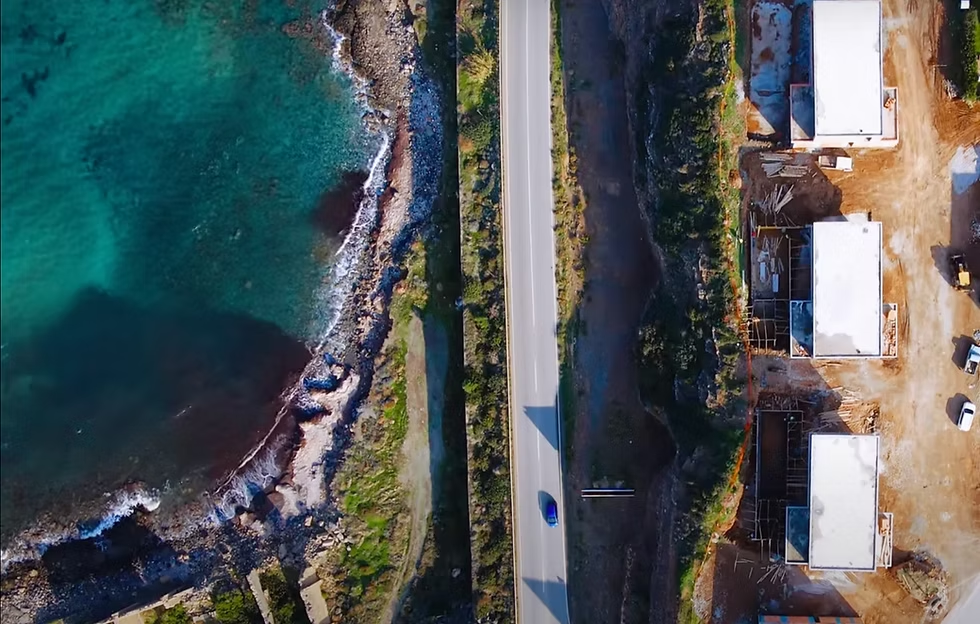
Unless you deliberately build your life around one compact area, I would include a car in the Northern Cyprus budget.
Public transport exists, but for the lifestyle most people imagine when moving here, a car gives you a completely different level of freedom.
Beach after work.
Dinner in Nicosia.
Golf in Esentepe.
A Sunday drive into the mountains.
Karpaz when you suddenly decide you’ve had enough of everybody.
That’s difficult to price into a spreadsheet, but it matters.
The actual monthly cost depends heavily on what you drive.
You need to think about:
Fuel.
Insurance.
Road tax.
Servicing and tyres.
Depreciation.
And, if you’re financing the car, obviously the monthly payment.
For normal everyday driving, I’d personally allow roughly £100–£200 per month for fuel, insurance and routine running costs before any finance payment or major repair.
Drive a thirsty SUV across the island every day and that number can climb quickly.
Drive modestly and live relatively close to the places you use most, and it can stay lower.
This is another reason why choosing where you live matters financially.
A cheaper home 40 minutes away from everything you enjoy isn’t always cheaper once your car becomes your second home.
In Northern Cyprus, location affects your fuel bill as well as your property bill.
What I Actually Spend on My SUV
To make this less theoretical, here’s a real example from my own life.
I drive an SUV in Northern Cyprus, and my regular running costs look roughly like this:
Fuel: around £50 every 10 days — approximately £150 per month
Insurance: around £600 per year
Road tax: around £500 per year
Routine servicing: approximately £350 every six months
Put that together and I’m spending roughly £300 per month — or around £3,600 per year — just to keep the car insured, taxed, serviced and fuelled.
And that’s before depreciation, tyres, unexpected repairs or any finance payment.
Could you spend less?
Absolutely.
A smaller, more economical car would change the calculation significantly.
But this is the point of using real numbers.
If the Northern Cyprus lifestyle you imagine includes a decent SUV and the freedom to drive wherever you want, £300 a month is a more useful number than pretending transport costs almost nothing.
06 — Electricity, Water & Internet: The Bills That Surprise People
Household bills in Northern Cyprus are manageable, but they depend heavily on how you live.
Electricity is the big one.
In spring and autumn, when the windows are open and the air conditioning isn’t fighting the Mediterranean sun all day, your electricity bill can feel perfectly reasonable.
Then August arrives.
The air conditioners start working overtime.
Suddenly your relationship with the electricity meter becomes considerably more personal.
The size of your home, insulation, number of air-conditioning units, pool equipment and how often you’re actually at home can completely change the bill.
This is why I wouldn’t trust anyone who gives you one universal “monthly electricity cost.”
Water is generally a smaller part of the household budget, although a large garden or private pool obviously changes consumption.
Internet and mobile service should also be treated as normal monthly expenses rather than major lifestyle costs.
For budgeting purposes, I would personally keep a household utilities buffer rather than obsessing over one exact monthly figure.
Some months will be cheap.
Some months the weather will make the decision for you.
The house you choose matters here too.
A beautiful glass-heavy home with poor insulation may look incredible at sunset…
but your air conditioner may become the most hardworking member of the family.
What I Actually Paid in August
In August 2026, my own household bills were:
Electricity: £139.12
Water: £14.35
Internet: £15.00
That’s £168.47 combined for electricity, water and internet during one of the hottest months of the year.
I wouldn’t use this as a universal average — your home, air-conditioning habits, occupancy and facilities can change the number significantly.
But it gives you something more useful:
a real-world reference point from someone actually living here.
07 — The Lifestyle Budget: Gym, Beach Clubs, Sports & Actually Having Fun

This is the category most cost-of-living calculators quietly pretend doesn’t exist.
Having a life.
You can calculate rent, electricity and groceries perfectly…
and then somehow forget that you moved to a Mediterranean island because you wanted to enjoy yourself.
Gym memberships.
Padel.
Golf.
Beach clubs.
Coffee with friends.
The occasional massage.
A spontaneous drink.
A weekend in Karpaz.
None of these are essential for survival.
But we’re not calculating survival.
We’re calculating a good life.
And this category can be extremely cheap or surprisingly expensive depending on your personality.
Someone who swims in the sea, hikes, has friends over and enjoys local cafés may spend relatively little.
Someone playing golf regularly, eating at premium restaurants, using beach clubs and going out several nights a week can easily create a substantial lifestyle budget.
Personally, I would allow at least £150–£300 per month for hobbies, coffees, sports and spontaneous social spending if you want to enjoy the island without analysing every decision.
If your lifestyle is more premium, £400–£600+ per month is very easy to reach.
But here’s the good news:
Some of the best things here cost almost nothing.
The sea.
The mountains.
A sunset.
Friends around your table.
A long walk.
Northern Cyprus can be expensive if you want it to be.
But enjoying Northern Cyprus doesn’t have to be.
What I Actually Pay to Enjoy the Island
Let me make this more useful with some real numbers from September 2026.
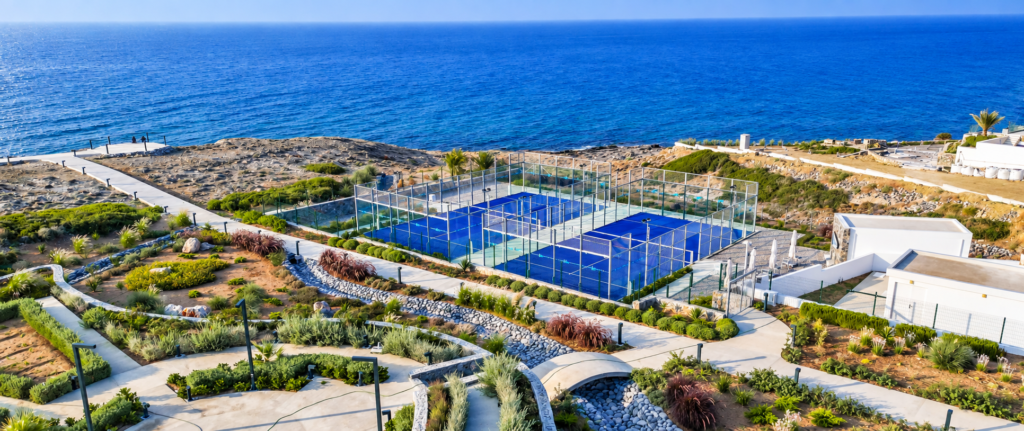
Where I live, I already have access to a boutique fitness centre at no additional cost, together with 12 outdoor pools, a tennis court and a basketball court, all included within the development’s maintenance structure.
But I also choose to train at Artis Club.
This isn’t exactly the budget-gym end of the market.
Think Mercedes-Maybach rather than public bus.
My annual membership is approximately £845, or about £70 per month, and gives me access to an indoor heated pool, sauna, steam room and premium wellness facilities, with personal training, cryotherapy and massage options also available.
One important detail:
The price I pay includes a residents’ discount available through the development where I live, so it shouldn’t be treated as the standard public membership price.
So yes — I already have a gym where I live and still voluntarily found another way to spend money on a gym.
Human beings are fascinating.
For padel, I currently pay around £15 per court hour, and I usually play once a week.
That works out at roughly £60–£65 per month if I keep the habit.
Again, this is my residents’ rate, as we receive a discount through the development, so the normal public rate may be higher.
Golf is where things become a little more serious.
Around €170 gets a single player approximately three hours of golf, with around €120 for each additional player.
But if you’re learning, a golf lesson can actually be surprisingly accessible: around €30 per hour with a personal trainer, including clubs and unlimited balls.
Then there are beach clubs.
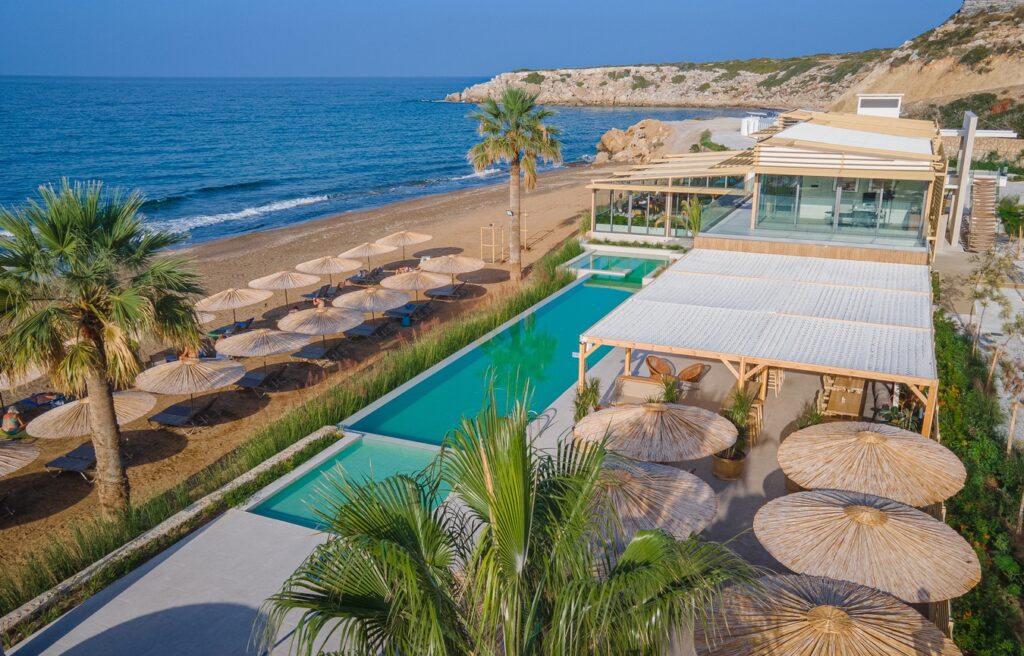
A perfectly decent beach-club day can start from around £4, including your sunbed and umbrella.
At the other end of the spectrum, you can spend hundreds of pounds creating a much more exclusive experience if that’s what you enjoy.
But I have to admit something:
The £4 Mediterranean and the £200 Mediterranean contain exactly the same sea.
That’s one of the things I love about living here.
You don’t necessarily need to spend a lot of money to access the best thing the island has.
Sometimes you just need swimming shorts.
A coffee from a café is roughly £3.
A normal dinner can range from around £10–£25 per person — and one thing worth knowing about Northern Cyprus is that portions can be seriously generous.
A proper meyhane night is another story.
Depending on how much you eat and drink, I would allow roughly £50–£70 per person.
And if you’re drinking, don’t drive.
One genuinely useful local-life hack is getting to know a reliable local taxi driver.
Explain that you’ll be using them regularly for nights out and ask about return journeys. Once you become a regular customer — and particularly once you know each other — you can often establish a much better arrangement than treating every journey like a random one-off taxi ride.
That’s actually quite typical of Northern Cyprus.
Relationships matter.
Finally, a good massage currently tends to sit around £50–£70.
Put all of this together and something becomes obvious.
Northern Cyprus doesn’t force you into one lifestyle budget.
You can use the gym where you live.
Swim in the sea.
Play tennis.
Walk in the mountains.
Have friends over.
Spend a day at the beach for £4.
And have an incredible quality of life without spending particularly aggressively.
Or you can choose premium gyms.
Golf.
Massages.
More exclusive beach clubs.
Restaurants several nights a week.
Long meyhane evenings.
And suddenly your lifestyle budget looks completely different.
The island gives you both versions.
You decide which one appears on your bank statement.
And that’s probably the most important thing to understand about the cost of living in Northern Cyprus.
It isn’t simply cheap or expensive.
It is remarkably flexible.
If the numbers make sense and you’re wondering what you can actually do with that lifestyle, I wrote a completely separate guide about exactly that:
→ How to Hack the Northern Cyprus Lifestyle
08 — Healthcare: Not an Everyday Expense, Until It Is
Healthcare isn’t something you necessarily spend money on every month.
Until suddenly it becomes the only expense you care about.
Northern Cyprus has both public and private healthcare, and many residents choose private hospitals, clinics, dentists and specialists when they want quicker access or a particular doctor.
For everyday appointments, tests or dental work, private healthcare can often feel accessible compared with some Western European markets.
But I wouldn’t build a healthcare budget around the assumption that “medical care is cheap here.”
A consultation is one thing.
Surgery, specialist treatment, repeated diagnostics or a longer hospital stay is something completely different.
If you’re relocating permanently — particularly with a family or later in life — I would treat private health insurance or a dedicated healthcare buffer as part of the real cost of living.
And I would check the policy properly.
Coverage limits.
Existing conditions.
Hospital network.
Emergency treatment.
What is actually covered rather than what the brochure makes you feel is covered.
Healthcare is one of those costs where the cheapest option isn’t necessarily the cleverest one.
You may go months barely spending anything.
But your financial plan should still assume that eventually, you will need it.
09 — So, How Much Do You Actually Need Per Month?
This is the number everybody wants.
So let’s finally answer it.
But I’m not going to pretend there is one universal monthly budget.
Instead, imagine three different versions of life in Northern Cyprus.
1. The Simple Mediterranean Life
You rent a modest 1-bedroom apartment.
You cook most of the time.
You drive an economical car.
Your entertainment is more sea, hiking, friends and local cafés than premium restaurants and golf.
A realistic monthly budget could look roughly like:
Rent: £500
Groceries: £225
Utilities & internet: £120
Car & transport: £150
Eating out & coffee: £150
Lifestyle / sports / miscellaneous: £150
Approximate total: £1,295 per month
Give yourself some breathing room and I would think of this as roughly a £1,300–£1,500 lifestyle.
Not luxury.
But certainly not suffering either.
2. The Comfortable Mediterranean Life
This is probably closer to the lifestyle many people actually imagine when they think about moving here.
A good 1- or 2-bedroom home.
A decent car.
You eat well.
Go out regularly.
Play sports.
Use beach clubs.
Occasionally have a proper meyhane night.
And you don’t calculate the financial consequences of every cappuccino.
Rent: £700–£900
Groceries: £300–£400
Utilities & internet: £150–£200
Car: around £300
Eating out & coffee: £250–£350
Sports / social life / miscellaneous: £250–£400
That puts you roughly around:
£1,950–£2,550 per month.
Personally, I think around £2,200–£2,500 per month for one person gives you a very comfortable life here without needing to constantly think about money.
3. The Premium Version
Now let’s stop pretending everybody moves to the Mediterranean to become financially disciplined.
Premium sea-view home.
Good SUV.
Artis Club.
Golf.
Massages.
Restaurants several times a week.
Premium beach clubs when you feel like it.
Weekends away.
Wine you chose because you wanted it rather than because it was on promotion.
Housing: £1,200–£1,800+
Groceries: £400–£500
Utilities: £200+
Car: £300–£500+ before finance
Restaurants & social life: £500–£800+
Sports, wellness & entertainment: £400–£700+
You’re now very easily in the region of:
£3,000–£4,500+ per month.
And Northern Cyprus will happily allow you to spend considerably more if you insist.
Here’s the interesting part.
All three people live next to the same Mediterranean.
They see the same mountains.
They can swim at the same beaches.
They watch the same sunset.
The difference is not necessarily the quality of the island.
It’s how much convenience, property, service and luxury they choose to place around themselves.
And remember: if you own your home outright, remove the rent line.
Suddenly a £2,200 lifestyle may become something closer to £1,400–£1,500 in monthly cash expenditure.
That’s why home ownership changes the Northern Cyprus cost-of-living equation so dramatically.
What About Couples and Families?
Two people do not automatically mean twice the budget.
A couple shares the biggest expenses.
One home.
One internet connection.
Often one or two cars rather than duplicating every cost.
Electricity doesn’t suddenly double because another toothbrush appeared in the bathroom.
Groceries will increase.
Restaurants cost more.
Travel and entertainment increase.
But many of the fixed costs remain shared.
As a rough rule, a couple living comfortably may need something closer to 1.4–1.6 times the budget of one person rather than twice as much.
Families are different.
Once children enter the equation, schooling, childcare, healthcare, a larger home and additional transport can change the budget substantially.
In particular, private-school fees deserve their own calculation rather than being hidden inside a generic monthly estimate.
A couple can often share a lifestyle.
A family adds entirely new categories to it.
Families are a different calculation.
Once children enter the equation, schooling, childcare, healthcare, a larger home and additional transport can change the budget substantially.
That’s why I don’t think it’s responsible to squeeze a “family of four” number into a generic cost-of-living estimate.
A family deserves its own calculation.
I’ll cover that separately — including housing, private schools, healthcare, transport and realistic monthly budgets for families living in Northern Cyprus.
So, Is Northern Cyprus Actually Cheap?
Yes.
And no.
That’s probably the most accurate answer I can give you.
Northern Cyprus can be remarkably affordable if you own your home, enjoy local food, use the nature around you and don’t need luxury attached to every experience.
It can also become surprisingly expensive if your version of Mediterranean living includes a premium sea-view home, a good SUV, golf, restaurants several nights a week, wellness, travel and a weakness for saying:
“We’re already here. Let’s enjoy it.”
I know that weakness quite well.
But after looking at all these numbers, I think focusing only on whether Northern Cyprus is cheap misses the point.
The more interesting question is:
What do you get back for the money you spend?
For me, that’s where the island becomes interesting.
A relatively ordinary monthly budget can still place the Mediterranean within minutes of your home.
The mountains can be part of your weekend without requiring a flight.
Dinner outside doesn’t need to be a special occasion.
A £4 beach-club entrance can give you the same sea as somebody spending £200 next door.
Friends around your table cost almost nothing.
And some of the best days here are the days when you barely open your wallet.
That’s why I wouldn’t describe Northern Cyprus simply as cheap.
I would describe it as a place where your money can still buy a surprisingly good quality of life.
Of course, only if the lifestyle itself suits you.
Because a spreadsheet can tell you what your rent costs.
It can tell you what I spend running an SUV.
It can tell you what my electricity bill looked like in August.
It can even tell you roughly how much money you need each month.
But it cannot tell you whether you’ll actually be happy here.
I wrote about that separately:
→ What Is It Really Like Living in Northern Cyprus?
And if you’ve already decided the lifestyle is for you and simply want to know how to enjoy the island properly:
→ How to Hack the Northern Cyprus Lifestyle
In the end, perhaps the best way to think about the cost of living in Northern Cyprus is this:
Don’t ask only whether you can afford to live here.
Ask what kind of life you can afford to build here.
Those are two very different questions.
— Özbil Akbil